KULTUR // Kwiet NoisePage 01
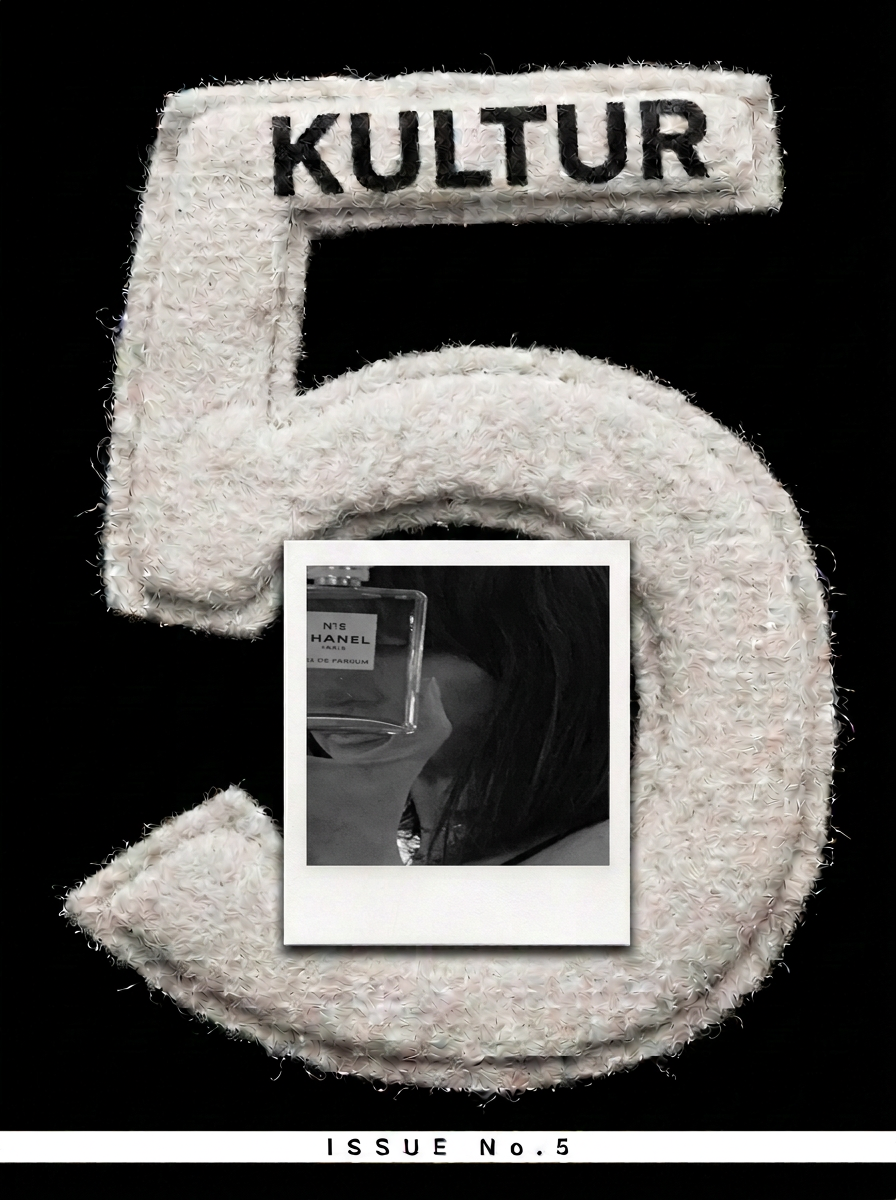
KULTUR · No. 5 · Kwiet Noise01
HOW TO PRINT THE PDF: click ⇩ Download PDF above — the whole issue saves as a black-and-white PDF. Or press Ctrl+P (⌘P on Mac) and choose "Save as PDF".
→ WEMTEX DRONE STUDIO NO. 1
A digital audio drone synthesizer — continuous tone generation, frequency drift, harmonic layering and live filter sweeps. Built for sustained textures and ambient sound design. Tap the link to open the studio in a new tab.
→ KULTUR GAMELAN DRUM MACHINE
A gamelan-inspired drum machine and mixing desk — step-sequenced Kendhang, Bonang, Saron and Gong patterns across 16 steps, with 8 sample pads, channel strips, EQ, compression, LED metering, vocal echo and recorded takes. Tap the link to open the machine in a new tab.
KULTUR No. 5 — an independent print issue assembled story by story.

The pictures here were originally published by my former employers (sic) i-D magazine. Employment law requires payment, otherwise you could call it slavery — illegal at the time. However, the amount of juice I got in the clubs, not to mention the party favours that were available, were mind-boggling. I wouldn't spill the beans about it if they put me on the rack.
It seems i-D wanted to take the temperature of the clubs and the streets, but I felt if they were about to capture the zeitgeist of that moment I had been paid in full just by way of kudos. After all, I knew the right dances — that worked as a silent password. And just for good measure I was never a slouch in the sartorial department, always being the jammiest bloke that I knew when it came to strokes of luck where you got to look rather swish with zero effort or care. That's how come I landed at i-D in the first place.
I wasn't quite aware they were after the stay-out-all-night, sans-toothbrush, music-obsessive connoisseur who automatically directs their ears to be pricked up, to the extent that the only comparison would be an aural version of the jumping spider. “Aural exciters, louche weirdo look” indeed. I was unaware there was such a crowd — or, as the number-crunchers call 'em these days, “the demographic” — all jenked (made-up word; like imaginary numbers, the only way to describe this kind of behaviour). It was me and my pals, photograbbed after a good night's sleep (not), meaning we had been enthusiastically listening to the best music available, as usual. Ahh youth. NKAA — no kip at all.
i-D magazine was endeavouring to catch a moment of all the underground tribes in London, in the clubs and on the street at that time. So they called in the paninari boys — roughly translated as the sandwich boys: they like Italian clothes like Gallini and eating spaghetti sandwiches. Also the gothic, scary, Anti-Nowhere League-looking types that they were particularly enamoured with. Good job the bookies were closed that day; if they were open they would have gone to the wall shortly thereafter.
The feeling was that their thinking was, in terms of the future — when we have robots and hand-held comm devices and all that far-off Star Trek stuff — that this would be the dominant Mad Max cultural-favourite look. Determined to keep these people separated, they tried to avoid unity for fear of not making a photo shoot work. They feared a Lower East Side, five-boroughs, Afrika Bambaataa-style moment where the gangs dissolve and get busy with the street. I guess we avoided that scene in The Warriors with that actor whose name I am not interested in — but he also plays the bad guy in Dirty Harry. If I ever need to cast a creep and he's still alive, I may have to find out his name one day.
So the shoot drones on and on and on, with the Euro-sport billies joining the panninaris (they were English, but it's OK, I won't call them the sandwich boys), and do-rag types and every other fleeting trend of the day. Yawn. After this was published, many a fashion editor and hipster DJ had moved to London and given me earache because of this photograph — because before that, people were huddling into said rockabilly, skinhead, punk rock and soppy student looks: European-sportswear-wearing, do-raggers, not-quite-as-on-point-as-they-would-like-to-be b-boys, and that sort of thing.
Well, as Steely Dan, reggae and low-key hip-hop post-punk pioneers, we were a little bit more grown-up, digging for every break in existence. This was around the time that me and Nellee were sharing a flat in Camden. I happened to have a job working for the brand formerly known as Acme Attractions, where Don Letts and Jeanette Lee once worked the coolest looks on the King's Road, turning Bob Marley on to the new vibes of the youth in the UK (it's a punky reggae party and it's alright — big up Viv Goldman). But this one was at Chelsea Wharf.
The guy who gave me the job, John Krevine, had recently made like a potato and chipped — thanks Jon! Employ, deploy and bounce… tactical moves. It makes sense now: you're a spy, hence the electronic gear, i.e. jukeboxes. He left the company post-haste and went to live in Israel.
A new partner got involved with Stephane Raynor at that point; his name was Mr Khan. This guy made Ebenezer Scrooge look like the world's greatest philanthropist. He was literally a miser. My job was to get pieces of artwork together for the T-shirts, on tap to sell in the shop at the weekend, and he was so stingy that he told me to go and get the Letraset books, cut the pages out and paste them down. I said, “Oh, can I have some petty cash, please?” He said no and told me to go and steal one. I said, “Well, no thanks — prison is not for me.”
So, to his chagrin, he deployed a Rumpelstiltskin/Kali-style dance for a few fleeting seconds and reluctantly gave me the petty cash to keep his thriving business going. I had to cough up half the price and go fifty-fifty with him, even though he was the owner. Welly welly well — them iz the breaks.
Every time I spoke to the stylist formerly known as Stephane Raynor — now to be known as just “Steff”, as in Keef, the so-called creative owner — he was too busy sniffing around St Tropez and was obsessed with his girlfriend Stena, who he envisioned as a Danger Diabolik girlfriend. He must have been wearing spritz goggles, because she kept flashing her pants at me and giving me the come-on, and I was not even vaguely interested. The measure of interest I showed could only be quantified on the scale of the Planck length. Good job I had the ten-foot barge poles ready — we were on a wharf, after all.
Those Chanel No. 5 and Hermès T-shirts: we had a screen-printing place down there, so I used to moonlight printing them. I printed a bunch of those Chanel No. 5 ones and then walked up past World's End to the King's Road. I had around thirty of them. By the time I got to the Dome, which used to be the Roebuck on the corner, all of them had gone. It seemed to be the most popular thing ever. So I went back the next day after work and did some more. Ad infinitum. For now. Then.
John Krevine and Stephane Raynor had done the licence with Malcolm and Vivienne to do those SEX/Seditionaries items that they both were bored to tears with, no doubt — with a little help from Andrew Czezowski, who turned a grubby old dump in Covent Garden called Chaguaramas, haunted by the likes of Gene October and pals, into punk rock HQ no. 1: The Roxy. Utilising the skills of ace filmmaker, tastemaker and raconteur DJ Don (Gorgon) Letts — The Tits, The Cowboys and Mickey Mouse, Vive Le Rock, One of These Days, bondage trousers, boots, the lot — all of it involving brown envelopes full of cash and a quick dash to the local tobacconist.
Here they are with such rarefied pieces of art, just being so brash about the way they were exploiting it, because Malcolm and Vivienne were no nostalgia fans of last year — no, obviously — and boy, they didn't do them much justice or care one iota, especially when Mr Khan was involved. There were boxes and boxes of these muslins everywhere; Mr Khan's job was to sell the worst version of these things possible to deluded children. So I printed a bunch of those Chanel 5 tees 'n' muslins. That muslin is now in the Victoria and Albert Museum in London. How it got in there is beyond me, but I suppose that's culture for you.
We'd stay late printing The Cowboys and Vive Le Rock on duvet covers and pillowcases. Every now and again a nice little punk-rock artistic endeavour — art for art's sake.
The Chanel T-shirts were my little afterthought, however — the No. 5, and Gucci, and Hermès. The détournement was off the chart, and I must say I was impressed with myself. Just like spunky ol' James Brown, I wanted to jump back and kiss myself. I thought fashion was for grandma.
Anyway, the whole summer dragged on and on — this was 1987, before the disastrous rave racket that killed more brain cells than there are integers and prime numbers in the Riemann hypothesis. At the same time I was doing the Drop Out spots at the Wag, Limelight, et cetera.
When we rocked the Gucci tees that we got a cease and desist for, one day me and Tim Simenon decided to get some Gucci shoes and stuff to go with our bootleg tees. The night before, we had been to see Schoolly D performing “Gucci Time” at Delirium. Just as we walked into Gucci, who should walk in but Schoolly himself, with his “chick” of the day looking spoiled rotten, like the inventor of gangsta shit should be.
I also made a rather popular Chanel double-C tee, but the No. 5 was always the most popular. This went on all year. One day, me and my then-girl Rachel, who worked at World's End, after swanning around the Mud, the Wag and the Opera House like a Poundland version of Charles and Di — without me being mistaken for the FA Cup, of course (saying that, I like a good chinwag with a weeping willow every now and again) — we decided to use the proceeds of some of that filthy lucre to go on holiday to Greece.
To cut a very long story short, as soon as I stepped out of the country all hell broke loose. Tom, Dick and, I suspect, Harry were all at it. As soon as I arrived back, Nellee — who had sneakily been knocking them out himself with £500 he found in the dresser, and was limbering up to do a Wild Bunch session — said that some shop up the road was making them.
I went up there fuming, threatening this chump with total annihilation for having the audacity to bootleg my bootleg. He just looked at me, tutted, shook his head and muttered something along the lines of “You mug” under his breath, like a prototype Danny Dyer.
At that time there was a thing for seventies rare groove in London at the Cat in the Hat and Black Market at the Wag, courtesy of Lascelles, Barry, René Gelston and Steve Jervier. A few synapses fired and I thought: what's a good seventies graphic? Two came to mind. The dumb-looking American peace fingers: too septic. And the smiley: too stupid. But wait, I thought — since when did doing something dumb ever stop me before? The very next day I was walking out of the print shop with a bag full of smileys. “You fools,” I thought. “I shall have my revenge.”
I proceeded to strong-arm Caryn, Dylan and Beth at i-D into giving me major space in i-D as a pre-Insta platform to showcase these goodies. This was after I had already introduced Tycoon Tosh tees, Hysteric Glamour and Japanese production to the UK, eliciting a quick-fire response from a young James Lavelle to write love letters to me via i-D. I never got them. Thanks, Terry Jones. By the way, Perry Haines founded i-D.
No one seemed interested in the tees, but I did the shoot with Eddie Monsoon regardless, with the Duffer boys and some waifs and strays we picked up in the clubs. The shoot appeared over many pages, using the most unfashionable clothes I could find — I mean polyester flares, the lot; it was horrible. I got the styling credit in letters so small you may need the James Webb Space Telescope to see them, plus the idea for the winking smiley. Thanks for the credit, Tez. This was to come out as the 1988 smiley-face cover of i-D.
[Side text placeholder — write alongside this picture.]
[Side text placeholder — write alongside this picture.]
Before that had even come out, I went to a club run by Dave Dorrell where Danny Rampling saw me wearing a smiley T-shirt and a jacket covered in smiley-face patches. Then all pandemonium broke loose — 1988, Shoom club. Next thing you know, it's splattered all over the place, smileys everywhere — good, 'cos it looked a little ridiculous; now I can move on and do something I like.
So I decided to take off to Tokyo, where the records, the clothes, the behaviour and everything were much superior to this little island called Britain. When the i-D came out and it was splattered all over, I called Rachel Parsons, who was a friend of Nellee's from Bristol, and asked her to make me some Radical Chic labels — which was the name of the article, after the Tom Wolfe piece. She did, and sewed them into the T-shirts when I got back.
Then the club Shoom started, the smiley thing went crazy, and the whole world seemed to adopt it as a logo for the age of the hyperactive idiot. The fashion was terrible: dungarees, tie-dye T-shirts and, like, a ponytail. They looked like undercover cops to me. But there you go. I couldn't believe the idiotic dancing, and the scale of the sheer thing.
[Side text placeholder — write alongside this picture.]
[Side text placeholder — write alongside this picture.]
I think I sold about three or four to this guy called Hassan, who's a major artist now, who had a shop called Rap in Covent Garden, with Spike and Neville who ran Legends, the Hug club, and had been at it for a while. They ran the pre-rave clubs from 1986 to 1988, double-dropping like a guy whose hand fell off 'cos his watch was too tight. This smiley thing started to appeal to me — not in an exploitative way, but because I fell in love with Alan Moore's Watchmen. Shortly thereafter, Ben and Toby Andersen and Kadir Guirey — formerly of Bonds Theatre, Clash-supporting band Funkapolitan — did the following: Ben put up money to make a bunch of smiley tees, long-sleeved with “hang loose” written on the back, and put a massive smiley billboard with my name on it on Golborne Road for, I'd say, a year. Having the ability to read the signs of the times came in handy — it was also a big LP that year, by the way.
Then we had the party at the Limelight, with Nellee Hooper and Tim Simenon DJing. I think it was comparable to a sardine can, the amount of people that were in there — a potential Hillsborough-style disaster on the cards. I remember two guys who used to declare themselves my official bodyguards, walking around in front of me like, “Make way, make way for the lord — Lord Barnzley (oh dear).”
Having smoke blown up your arse to such a massive degree was kind of embarrassing, because I didn't really know what to do with all the smoke. Luckily for me, the heat was taken off me when the acid-house thing happened. One minute I was the most popular person in the world, everybody being super-friendly; the next, people would cross the road and avoid me because there was a new thing: people from Essex with ponytails and Wallabees. I always thought that was kind of — I don't want to speak ill of the brain-dead — not the best.
No mobiles, no internet, no social networks. All done on the fly…
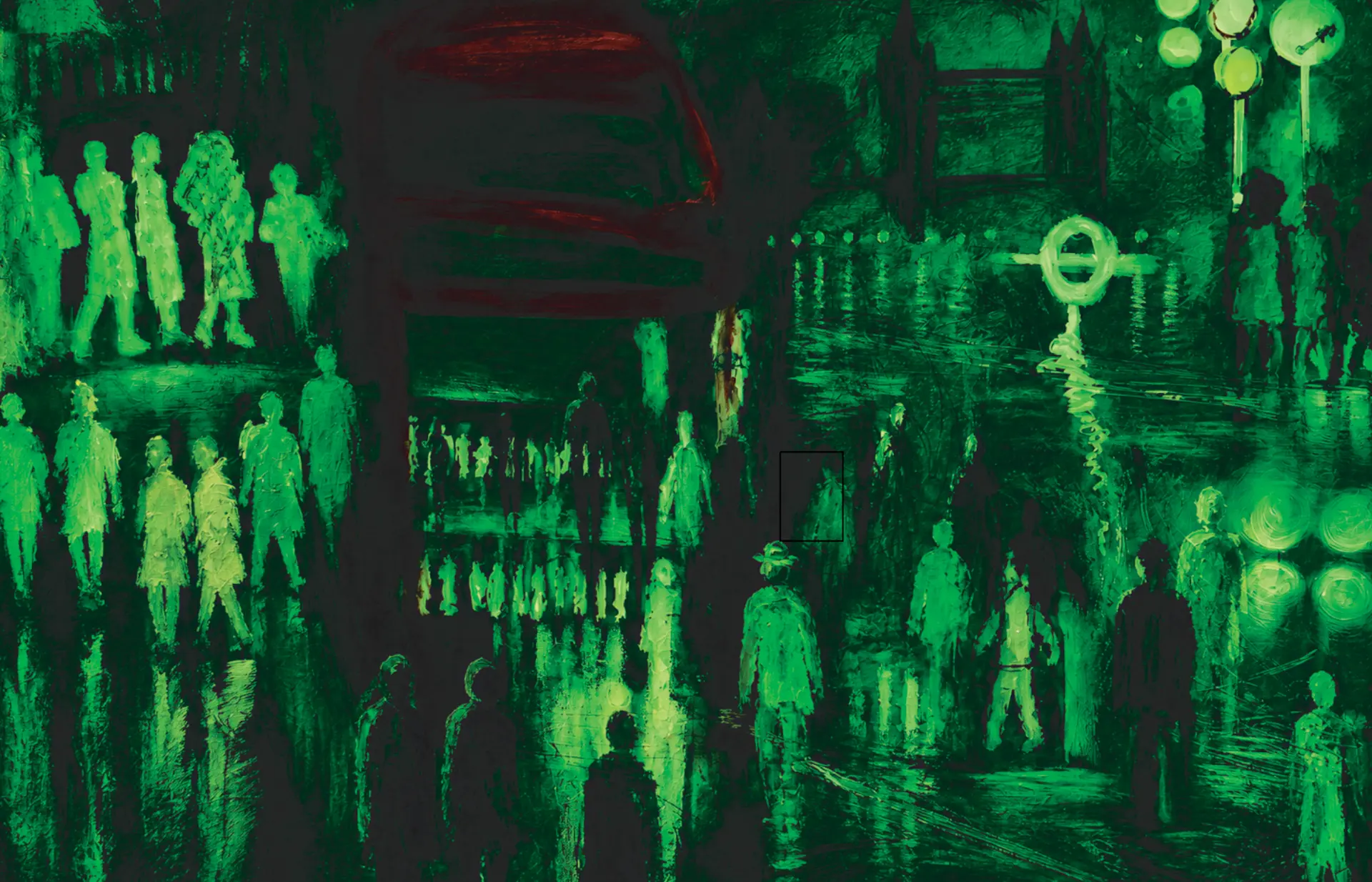
Issue 05 — Basement 5
[Nib's Basement 5 story goes here — standfirst placeholder.]
[byline placeholder]
[Nib's Basement 5 story goes here — body copy placeholder.]
[Side text placeholder — write alongside this picture.]

[Side text placeholder — write alongside this picture.]
[Writing space — your copy for this picture goes here.]
[Side text placeholder — write alongside this picture.]
[Side text placeholder — write alongside this picture.]
[Side text placeholder — write alongside this picture.]
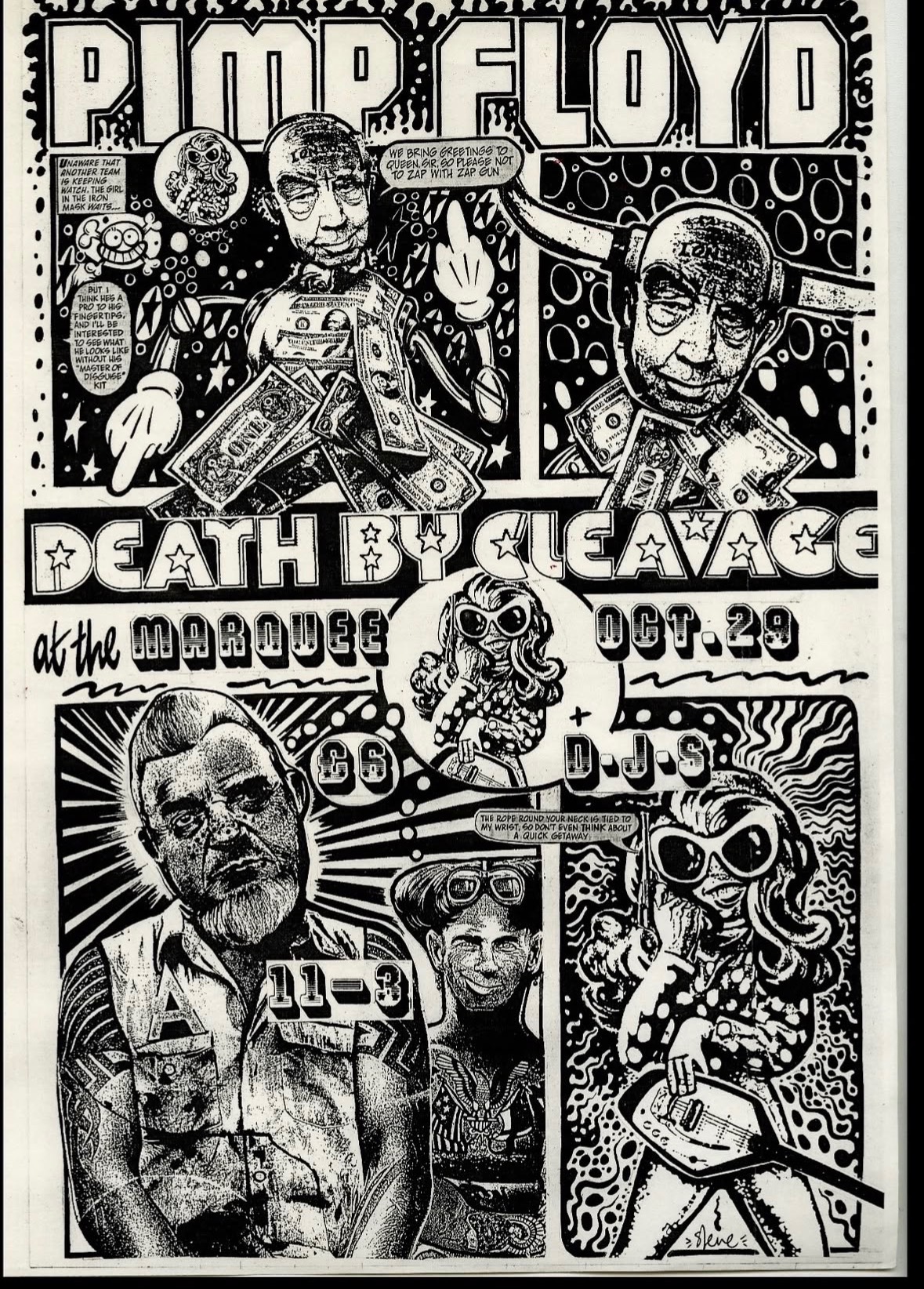
KING OF FASHION — LIMELIGHT
Limelight was where fashion, music and the London night collided. This flyer catches the club in full flight: clothes as declaration, the dancefloor as catwalk, and a crowd making the style up as they went along.
Tim Simenon of Bomb the Bass was part of that orbit, alongside the DJs who gave Limelight its charge. [Nib: add the DJ names, date and your own story here.]
Music / club credits: Tim Simenon (Bomb the Bass) · DJs: [add names]
[Side text placeholder — write alongside this picture.]
[Side text placeholder — write alongside this picture.]
[Side text placeholder — write alongside this picture.]
[Side text placeholder — write alongside this picture.]
Issue 05 — Wholesale & Press
Trade and press enquiries only.
[Side text placeholder — write alongside this picture.]
[Side text placeholder — write alongside this picture.]
[Side text placeholder — write alongside this picture.]
[Side text placeholder — write alongside this picture.]
Trade Enquiry
Buyer name[buyer name]
Company / store[company]
Email[email]
Territory[territory]
Message[message]